Where Should I Start? A Framework for Choosing Your First Real Business Decision
Every founder eventually asks the same question:
"Where should I start?"
It's a reasonable question, but it assumes there's a universal first step.
There isn't.
The right place to start depends on identifying the first decision your business actually needs you to make.
Starting a business isn't one decision. It's a series of decisions made in the right order. The challenge is that many early-stage founders try to answer five different questions at once.
- Is the idea viable?
- Who is my customer?
- What should I offer first?
- Do I need a website?
- Should I invest in systems now or later?
That is why the first decision is often not, "What should I do next?"
It is:
"Which decision am I actually trying to make?"
What "Starting" Actually Means
When founders say they need to get started, they are often talking about very different things.
For one founder, starting means validating whether the idea has real market demand.
For another, it means deciding what to build first.
For someone else, it means solving a specific bottleneck like pricing, lead generation, or offer clarity.
These are not the same problem.
They should not be solved the same way.
That is where decision quality matters.
If you misidentify the decision, you are likely to invest time, money, and effort into the wrong next move. You may build assets before validating demand. You may buy software before defining a process. You may hire support before measuring what is actually broken.
The goal is not to move quickly in every direction.
The goal is to move through the right decisions in the right sequence.
What Founders Typically Do Instead
Most founders do not struggle because they lack options.
They struggle because they have too many.
One common pattern is trying to solve everything at once. A founder starts posting content, researching CRMs, redesigning an offer, building a website, and asking for referrals—all in the same week.
Another pattern is following the loudest advice. One expert says branding comes first. Another insists the offer matters most. Someone else argues automation is the key to scalability.
None of that advice is inherently wrong.
It simply may not be right for your business today.
A third pattern is investing in the most visible problem. If the website looks weak, rebuild the website. If leads are slow, buy a marketing tool. If operations feel messy, purchase a CRM.
Sometimes those are the correct decisions.
Often they are simply the easiest decisions to see.
Research from CB Insights found that many startup failures stem from building solutions before validating whether the market truly needs them. In other words, founders often invest in solving the wrong problem before confirming they're solving the right one.
That is a sequencing problem—not necessarily a capability problem.
Why Sequencing Matters
Organizations with mature operating disciplines rarely begin by implementing a solution and then asking what problem it was meant to solve.
Instead, they follow a structured methodology that helps ensure the right work happens at the right time.
At Pinnacle Process Group, that methodology is RMAE™—Real Market Applied Entrepreneurship. It recognizes that businesses don't grow by completing random tasks. They grow by strengthening the right part of the business at the right time.
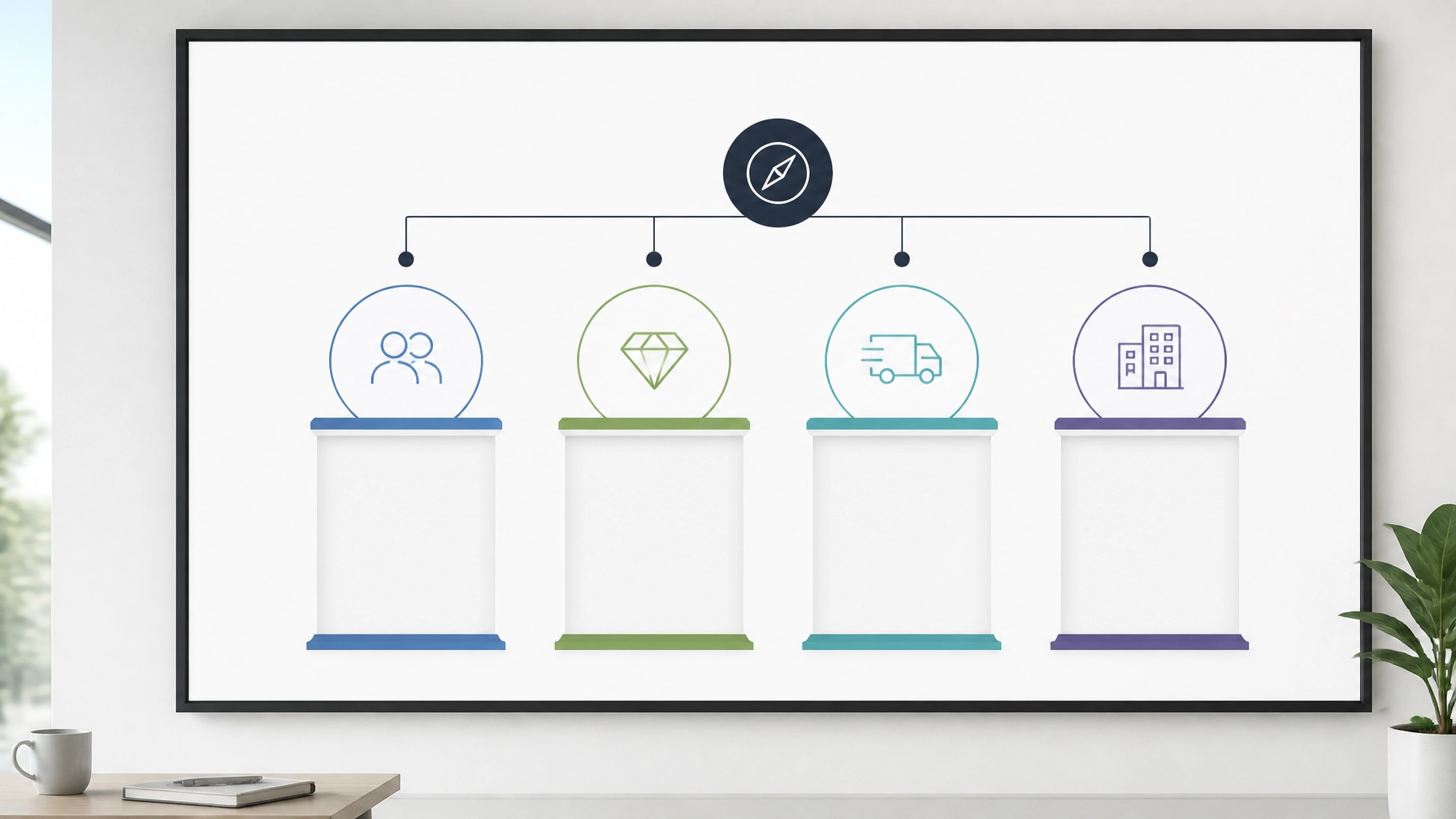
The RMAE Framework focuses on four interconnected pillars:
Customer
Who you serve—specific enough to find in the real world today.
Value
Why they choose you over anything else, including doing nothing.
Delivery
What you can actually fulfill today, not what you envision at scale.
Organization
The structure underneath—built to survive its own growth.
These four areas develop together.
If one advances too far ahead of the others, the business begins to lose alignment.
You can generate more leads, but if your value proposition is unclear, growth stalls.
You can refine your offer, but if you haven't identified the right customer, adoption remains inconsistent.
You can build sophisticated systems, but if you haven't proven people want what you're selling, those systems add complexity instead of creating value.
That's why sequencing matters.
The objective isn't simply to get more done.
It's to strengthen the right part of your business at the right time.
The Startup Genome Project has reported that many startups scale prematurely by investing in growth before the business is operationally ready to support it.
The lesson is simple:
The right investment at the wrong time often becomes the wrong investment.
A Practical Framework: Start with Clarity
Once you understand that not every business needs the same next step, the question becomes:
How do I know which pillar needs my attention first?
That's where practical decision support becomes valuable.
PPG offers a growing collection of free tools and decision guides designed to help founders work through common business questions—from customer clarity and lead generation to budgeting, operations, pricing, and planning.
Each resource is designed to strengthen one or more pillars of the RMAE Framework.
The goal isn't to tell you what to do.
The goal is to help you understand your current position so your next decision is based on context instead of guesswork.
The better you understand your business today, the easier it becomes to identify your highest-leverage next move.
Decision Summary: Choose the Highest-Leverage Move
The question is not whether you should build a website, hire help, or buy a CRM.
The real question is:
Which of those is the highest-leverage move for your business right now?
That answer depends on your current position.
If your customer is unclear, additional tools will not solve the problem.
If your value proposition is weak, more marketing activity is unlikely to improve conversion.
If your delivery isn't clearly defined, growth may expose weaknesses faster than it creates results.
If your organization isn't ready, adding complexity may reduce efficiency instead of improving it.
Better businesses are not built by making every decision perfectly.
They are built by strengthening the right part of the business at the right time.
That is what Real Market Applied Entrepreneurship is designed to accomplish.
Your Next Step
If you're still deciding where to begin, start with the Free Tools.
They're designed to help founders work through common business decisions using practical frameworks instead of generic advice.
Whether you're thinking about lead generation, planning, budgeting, operations, or another challenge, you'll find resources designed to help you make your next decision with greater clarity.
Explore the Free Tools → /freetools
If you'd rather build your understanding before tackling a specific decision, join a Basecamp Workshop.
Basecamp is a free introduction to the Pinnacle Process Group methodology and explores how Customer, Value, Delivery, and Organization work together to create a market-ready business.
Reserve Your Seat at Basecamp → /getconnected
Choose Your Next Step
Every business is different.
Choose the level of support that matches where you are today.
- Free Tools — Practical decision guides for common business questions.
- Get Connected — Register for our free workshop and learn about our vetted community for growing and aspiring founders.
- Support Suite — Go deeper with Trail Markers and structured implementation resources.
- Get Guidance — Work directly with PPG through a Process Check or Action Plan.
- Full Engagement — Build your business through structured implementation and personalized support.
No matter where you begin, the objective remains the same:
Build the right business, in the right order, for the right market.